
🤝 Slay the Spire 2 Multiplayer Guide
Slay the Spire 2 introduces a fully cooperative multiplayer mode that transforms the solo roguelike experience into a shared climb up the Spire. Whether you're playing locally or online, understanding how co-op mechanics work, which character pairings excel, and how to coordinate your builds is essential for success. This guide covers everything from core mechanics to advanced strategies.
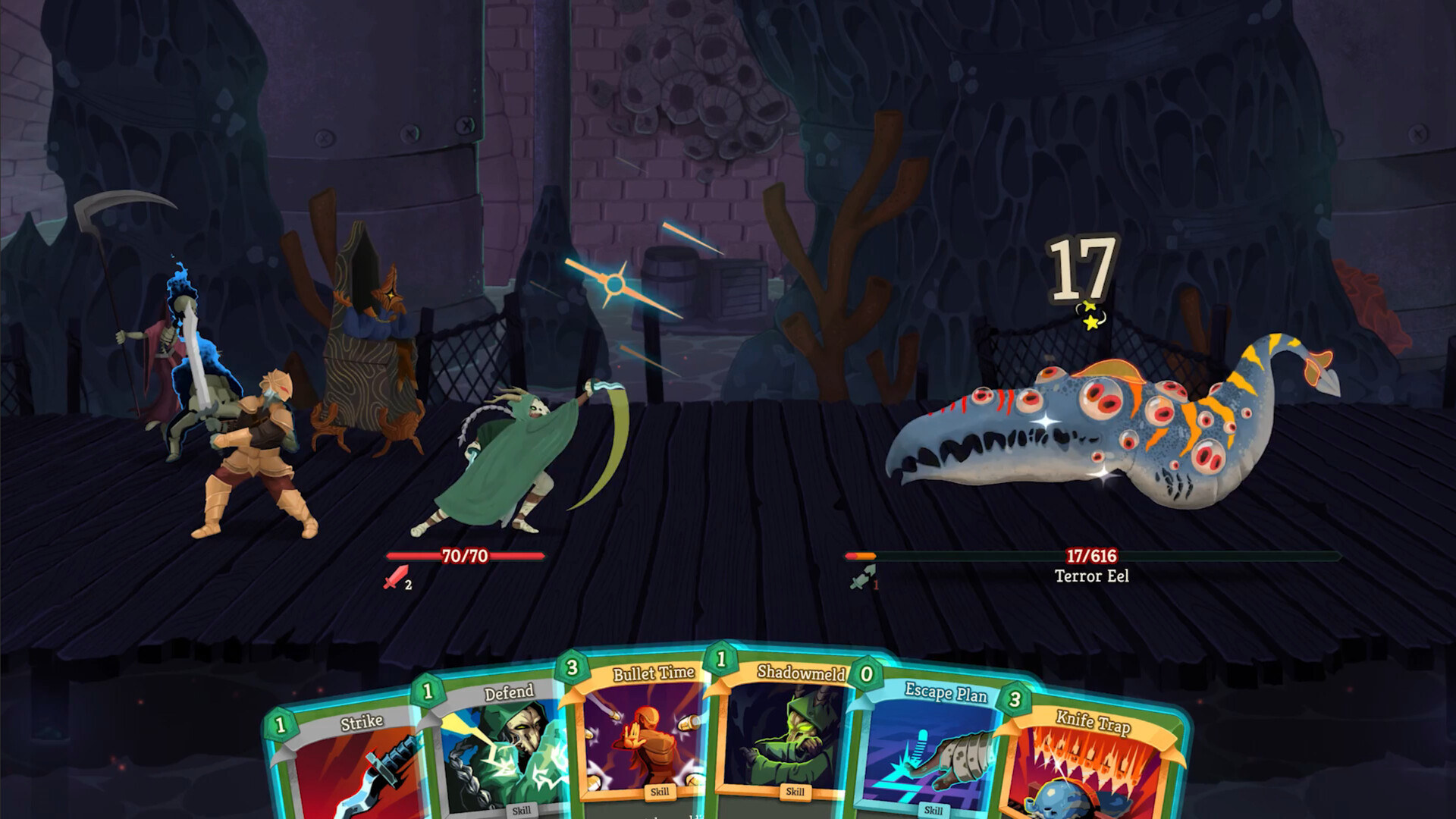
🎮 How Co-op Multiplayer Works
🗺️ Shared Map, Independent Decks
In Slay the Spire 2 co-op, both players share a single map layout. You travel together from node to node, encountering the same events, elites, and shops. However, each player maintains their own deck, relics, and gold. Cards and relics are offered independently — when you defeat an enemy, you receive your own card rewards and your partner receives theirs. Shops show the same item pool, but each player can purchase items from their own gold. This design creates fascinating coordination challenges: you must decide who takes which path, who engages which elite, and how to split resources without competing for the same cards.
Enemy scaling in co-op follows a formula that increases enemy HP and damage based on the number of players. Generally, enemies have roughly 1.5x to 1.8x health in two-player mode, and their attacks may hit multiple targets or deal higher damage. Boss fights receive the most significant scaling — expect bosses to have nearly double the HP they would in solo play, with adjusted attack patterns that can target either player. Elites also scale proportionally, so your team needs roughly 50–80% more total output than a solo player to survive comfortably.
⚔️ Turn Order and Combat Flow
Combat in Slay the Spire 2 co-op uses a shared turn structure. Each round, both players draw cards and play their hands, but the order in which you act matters. Typically, Player 1 (the host) acts first, followed by Player 2. Enemy intents are revealed at the start of the round, so you can coordinate: one player might block for both while the other focuses on damage, or you might split targets — one player handles adds while the other bursts the main enemy. Some cards and relics interact across players; for example, defensive buffs from one character can sometimes benefit the team. Communicating your intended plays before committing is crucial, especially in tense boss fights where a misplayed turn can mean defeat.
🎭 Player Roles and Team Composition
A successful co-op run often relies on clear role division. While Slay the Spire 2 doesn't enforce rigid roles, adopting a tank/DPS/support mindset helps. The tank focuses on generating Block, drawing aggro (when relevant), and surviving bursts so the team doesn't lose. The DPS player scales damage and focuses on eliminating threats quickly. Support can mean healing, debuffing enemies, applying Weak or Vulnerable, or providing energy and draw to the team.
👥 Best Character Pairings
Ironclad + Silent
Classic duo. Ironclad as tank/DPS with Strength builds or Barricade; Silent provides Poison scaling and defense. One of the most reliable pairings.
Defect + Regent
Defect's Frost orbs protect the team while Regent unleashes burst with Forge or Star Burst. Strong scaling synergy.
Ironclad + Defect
Double tank potential. Ironclad blocks and heals; Defect stacks Frost and Focus. Very hard to kill, though damage can be slower.
Necrobinder + Silent
Necrobinder's Osty or Doom scales while Silent applies Poison and Weak. High damage over time, but requires setup.
Explore our character guides and tier list to refine your picks.
📢 Communication and Coordination Strategies
Co-op runs live or die by communication. Before the run starts, discuss which character will pursue which archetype so you don't overlap. If both of you chase strength scaling, you might compete for similar relics. During combat, call out your intent: "I can block 30 this turn" or "I can kill the right add." Before taking an elite, confirm both players have enough HP and relevant cards. At rest sites, decide together who upgrades versus who heals — often one player can afford to skip healing if the other takes it. In shops, announce what you're buying so your partner doesn't duplicate or miss key synergies.
Use external voice chat if playing online; the in-game ping system helps but is limited. For advanced coordination, establish shorthand: "I scale" means you're setting up for a long fight, "I go aggressive" means you're burning resources to finish quickly. See our beginner guide for base mechanics if either player is new.
🏆 Best Builds for Multiplayer
These builds excel in co-op due to their reliability, scaling, or team utility. Each fits a clear role and pairs well with complementary archetypes.
Ironclad Strength Build
Stack Strength with Inflame and Demon Form, then unleash Heavy Blade. Reliable DPS that doesn't depend on your partner. Ideal for the aggressive half of a duo.
Defect Frost Build
Channel Frost orbs and Focus to become an unkillable block engine. Protects the team while your partner handles damage. Best tank in co-op.
Silent Poison Build
Passive Poison scaling works perfectly in co-op — apply stacks early, then focus on defense while damage ticks. Pairs with any aggressive partner.
Ironclad Barricade Build
Body Slam converts Block into damage. In co-op, you can afford to scale slowly since your partner handles early threats. Strong late-game finisher.
Necrobinder Osty Build
Osty acts as a persistent minion that blocks and attacks. Frees your partner to focus on scaling. Good for teams that want a flexible third "unit."
Regent Forge Build
Forge powers Sovereign Blade for burst damage. Pairs well with a tank — Regent focuses on killing while the partner survives. High skill ceiling.
Browse all builds in our builds database for more options.
📊 Multiplayer-Specific Card and Relic Tier Adjustments
📈 Cards That Improve in Co-op
- Multi-target attacks (Whirlwind, Corpse Explosion) — Enemies have more total HP; hitting multiple targets is more valuable.
- Block-focused cards (Shrug It Off, Glacier) — Your partner can focus on damage while you ensure survival.
- Scaling cards (Demon Form, Noxious Fumes) — Fights last longer; passive scaling pays off more.
- Debuffs (Weak, Vulnerable) — Benefit both players' damage output.
- AOE and Cleave — More bodies on screen; cleave effects shine.
📉 Cards That Get Worse in Co-op
- Single-target burst — One-shots matter less when enemies have 50%+ more HP.
- Self-only buffs — Team-wide effects are relatively stronger.
- Exhaust-heavy engines — Risk running out of steam in long multi-enemy fights.
- Cards requiring setup — If your partner can't hold the line, you never get online.
Check the card tier list for full rankings.
🗺️ Act-by-Act Strategy for Co-op
Act 1
Act 1 in co-op is about establishing your roles and picking up core cards. Prioritize damage — both players need at least one strong attack to contribute. Aim for 2–3 elites total if both of you are healthy; one player can tank hits while the other finishes. At rest sites, the lower-HP player should usually heal unless an upgrade is critical. In shops, coordinate: if one player buys a key relic, the other might save gold for the next floor. The Act 1 boss (Slime Boss, Guardian, or Hexaghost) has more HP — plan for a 6–10 turn fight. One player should have block solutions; the other should have scaling or burst.
Act 2
Act 2 ramps up difficulty. Multi-enemy fights (Gremlins, Byrd) are common — ensure at least one player has AOE or multi-hit. Elites (Gremlin Leader, Slavers, Book of Stabbing) are brutal; path to avoid back-to-back elites unless you're confident. By mid-Act 2, your builds should be taking shape: tank has block engines online, DPS has scaling. The Act 2 boss (Automaton, Champion, Collector) often has a nasty turn — communicate who blocks and who pushes damage. If one player is low, consider using a potion or holding block for that turn.
Act 3 and Boss Strategies
Act 3 is the culmination. Fights are long; scaling builds finally pay off. Save potions for the boss unless you're in danger. Before the final boss, rest if either player is below 50% HP — you need both alive. For the Act 3 boss (Awakened One, Time Eater, Donu & Deca), assign roles: one player handles the big hit turns, the other pushes damage. Time Eater restricts cards per turn — split plays so you don't waste actions. Awakened One punishes powers — limit power spam if possible. Donu & Deca require killing both — coordinate to burst one down, then the other. See our enemy strategies for detailed boss patterns.
⚠️ Common Mistakes in Multiplayer
- Both players building damage. You need at least one dedicated blocker. Two glass cannons get shredded in Act 2.
- Competing for the same cards. If both want Demon Form, you'll fight over it. Discuss builds early.
- Ignoring your partner's HP. A run ends when one player dies. Protect the weaker half.
- Greedy elite pathing. Two elites in a row without rest is often suicide. Plan your route.
- Not communicating. Silent play leads to double-blocking one turn and zero-blocking the next.
- Underestimating scaling. Enemies have more HP. Slow scaling builds that work solo may timeout in co-op.
💡 Multiplayer Tips and Tricks
- Tip 1 — Divvy roles before Floor 1. Decide who's tank and who's DPS. Stick to it when picking cards.
- Tip 2 — One player scouts, one commits. When pathing, have the more flexible build take risks; the other plays safe.
- Tip 3 — Prioritize synergies over raw power. A card that enables your partner (Weak, Vulnerable) can outvalue a selfish pickup.
- Tip 4 — Save key potions for bosses. Especially Artifact potions for debuff-heavy bosses, or Block potions for big-hit turns.
- Tip 5 — Rest early if both are wounded. One 30-HP heal is often better than two marginal upgrades.
- Tip 6 — Avoid curses together. If one player takes a curse for a strong relic, the other should compensate with extra draw or removal.
- Tip 7 — Use events strategically. Knowing Card Removal costs gold — if one player is rich, they might fund both removals.
- Tip 8 — Don't over-block. If your partner already has 40 Block, adding 20 is often wasteful. Communicate block totals.
- Tip 9 — Plan elite order. Hit an elite, then rest, then the next elite. Never elite–elite–rest.
- Tip 10 — Learn enemy patterns. Share intents aloud. "He's buffing, we can go aggressive next turn."
- Tip 11 — Gold hoarding pays off. If one player saves for a big shop, the other can spend earlier. Coordinate relic purchases.
🧠 Advanced Strategies
🛤️ Elite Pathing
Optimal elite pathing in co-op means maximizing elites while minimizing risk. Aim for 2 elites in Act 1, 1–2 in Act 2, and 1–2 in Act 3. Always rest between elites unless both players are at full HP. If the map offers a choice, take the path that lets you rest immediately after an elite. Campfires before bosses should be used for upgrades if possible — both players upgrading key cards often beats a late heal.
💰 Gold Management
Gold is independent but the shop pool is shared. If Relic X is in the shop and only one player can afford it, decide who needs it more. Sometimes the tank buys the block relic; sometimes the DPS buys the damage relic. Avoid both players buying mediocre relics — save for the next shop if nothing is critical. Events that cost gold (e.g., card removal) can be split: one player pays this time, the other next time.
💎 Relic Sharing Philosophy
Relics are not shared — each player has their own. But some relics indirectly help the team. Horn Cleat (block at turn start) lets the tank survive so the DPS can scale. Bag of Marbles (Vulnerable turn 1) amplifies both players' damage. When offered a relic that benefits the team, the player who gets more value should take it. Boss relics are especially important — if one player takes Velvet Choker, the other should avoid energy-heavy builds to compensate.
❓ Frequently Asked Questions
Does Slay the Spire 2 co-op support online play?
Yes. Slay the Spire 2 supports both local co-op (couch play) and online multiplayer. You can invite friends via Steam or other platforms depending on your version.
Do we share gold or relics?
No. Each player has their own gold and relic collection. Card rewards are also independent. You share only the map and combat encounters.
What happens if one player dies?
If either player is defeated, the run ends. There is no revive mechanic in standard co-op. Keeping both players alive is the top priority.
Does Ascension apply to co-op?
Yes. Ascension modifiers affect co-op runs. Both players should be comfortable with the chosen Ascension level. Start at A0 or A1 when learning, then scale up.
Which characters are best for co-op beginners?
Ironclad and Defect are forgiving — Ironclad has high HP and self-heal; Defect can block passively with Frost. Pair one of them with Silent for Poison scaling. Avoid Necrobinder and Regent until you're comfortable with their mechanics. See our character overview for details.